Sakura Foam Seal Systems Malaysia
No Evaporation. No Spark. No fires. No Mess.
What is the main cause of fires in petroleum storage tank?
During the 1964 Niigata earthquake, a catastrophic fire erupted in five crude oil tanks, burning for two weeks and destroying 286 homes. The culprit? The traditional mechanical seal. During severe sloshing, metal-to-metal contact between the floating roof and tank walls generated sparks, igniting combustible vapors.
To prevent these disasters, the industry shifted to the Sakura foam seal — a flexible design made from polyurethane foam and specialized rubber.
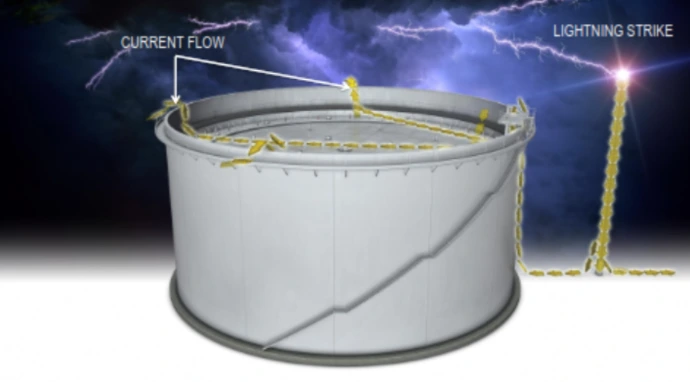
- Spark-Free Safety: Being completely non-metallic, it cannot generate friction sparks during earthquakes or lightning strikes.
- Vapor Elimination: Resting directly on the liquid, it removes the space where dangerous gases gather.
- Proven Reliability: It safely maintains a flawless "zero accident" record across more than 3,000 global installations.
What Are Foam Seal Systems?
In floating roof tanks, seals are required between the pontoon and tank wall. This is where foam seal systems were installed.
Unlike mechanical seals that utilize pantograph structures and leave air gaps where highly concentrated, combustible vapors can accumulate, the foam seal mounts directly on the liquid's surface.
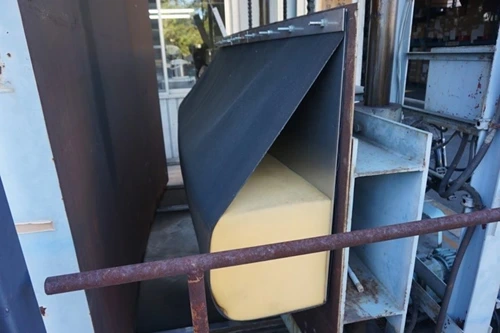
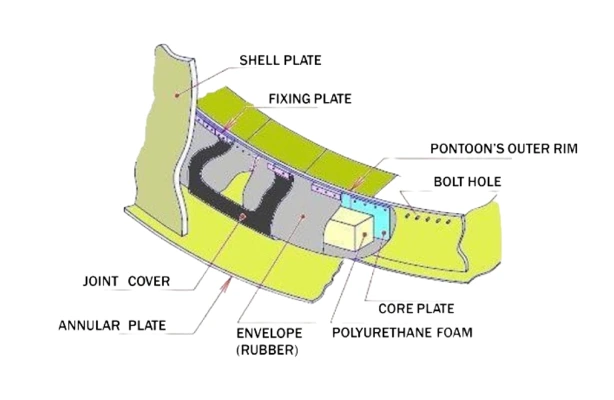
Its structure is elegantly simple, consisting of a highly flexible polyurethane foam core wrapped in a specially formulated rubber envelope. By maintaining constant, soft contact with the stored product, it effectively eliminates the vapor space, achieving "almost ZERO emission" of dangerous gases.
Key Features
Sakura Foam Seal Systems

No Spark
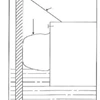
The metal-free sealing surface prevents sparks during lightning strikes or pontoon movement - resulting in "zero accident" operation record for over 3,000 tank installation.
Liquid Touch
The soft foam in contact with the stored liquid, eliminating the accumulation of the combustible vapors.
Flexible
The flexible foam core enables it to adjust and follow the tank wall's deformation, distortion or weld lines.
Absorb Forces
The ability to absorb multi-directional forces, stabilizing the floating pontoon for smooth, "clockwork" elevation and movement.
Chemical Resistance
Special elastomers materials resistance to corrosion.
Simplified Mechanism
Use only primary seal and weather shield, replacing complex mechanical secondary or wiper seals.
Quick Installation
The simple structure with drastically fewer parts allow installation in days instead of weeks.
Low Maintenance
Inherently reliable, as it lacks rigid and complex components.
What's in it for me?
Some of the benefits you are expected to gain are:
Eliminates Lightning and Earthquake Fire Risks
Lightning causes a third of all tank fires, including 52 of 55 rim seal fires in one study. Standard metal seals spark during lightning strikes, as confirmed by API testing. The non-metallic Sakura seal acts as an insulator, preventing these sparks and protecting assets, infrastructure, and personnel from explosions.
Secures Corporate Reputation
A major tank fire can devastate a company's public image. By utilizing a system with a proven "zero accident" track record across more than 3,000 installations since the 1950s, operators effectively "secure life and reputation"
Stops Evaporative Product Loss
Crude oil storage tank evaporation causes significant profit loss. Unlike vapor-leaking mechanical seals, the Sakura foam seal completely fills the void, maintaining soft, full contact with the liquid. This achieves near-zero vaporization and emission, maximizing saleable product retention.
Easier Adherence to Stricter Laws
Strict government regulations on VOCs and greenhouse gases necessitate reduced emissions from storage tanks. The Sakura foam seal significantly restricts vapor generation, minimizing emissions, thus helping tank users easily comply with stringent environmental regulations and avoid fines or costly facility overhauls.
More Uptime Due to Rapid Installation
Tank maintenance halts revenue. Unlike complex traditional mechanical seals that require weeks to install or dismantle, the Sakura foam seal's drastically simpler design and fewer parts allow full installation in mere days, returning the tank to profitable operation much faster.
Adapts to Tank Aging and Irregularities
Storage tanks often settle, lose their roundness, and distort. Rigid mechanical seals struggle with these changes, creating hazardous gaps. The flexible polyurethane foam and rubber seal, however, effortlessly conforms to tank deformation and weld lines, ensuring the seal remains effective even as the shell loses its perfect cylindrical shape.
No Mechanical Failures
Mechanical seals, with moving metal parts, springs, and hinges, are prone to rust, corrosion, or jamming, necessitating parts replacement and periodic inspections. The Sakura foam seal eliminates these mechanical parts, reducing long-term labor and maintenance costs; it only requires status confirmation during routine tank openings.
Chemical-Specific Durability
Sakura provides specific rubber envelopes (e.g., 100% fluoroelastomers or specialized NBR blends) for tanks storing harsh chemicals (benzene, toluene, crude oil, methanol). These tailored formulations ensure maximum aromatic and chemical resistance, preventing premature seal degradation.
Sakura Foam Seal System for Floating Roof Tank
This tank sealing system is a true pioneer in its field, boasting a history of use in Japan since the 1950s. Its exceptional quality and safety are confirmed by a continuous record of zero accidents throughout its operation.
Sakura Foam Seal Systems
UPGRADE TO SAFER AND SIMPLE RIM SEAL SYSTEM.
PROTECT YOUR FLOATING ROOF TANKS!
Request A Quote for Tank Foam Seal Systems
Protect your floating roof tank from disastrous fire incident and hazardous emission.
Request your customized quote today.