
You pulled an oil sample at 250 hours. The dipstick looked clean, kinematic viscosity sat right on spec, and the laboratory green-lit the report.
Six weeks later, a rod bearing fails on your prime generator during peak demand. Now you’re facing a massive repair bill and an uncomfortable explanation to your superior.
You changed the OEM filters on schedule and ran a high-spec heavy-duty lube. So what actually caused the failure?
The culprit wasn’t sudden catastrophic metal fragmentation or degraded base oil. It was micro-silt — microscopic particles of soot, dust, and wear metals, completely invisible to the human eye. So fine that they can pass through standard full-flow filters, these particles circulate with the oil and enter the tiny clearances of dynamic bearings—silently accelerating wear and shortening component life.
Standard factory filters are designed to catch large debris, not microscopic dust. Over time, this tiny grit turns clean oil into liquid sandpaper, quietly grinding down critical engine parts until the entire system fails.
Here is why this happens, why traditional oil changes cannot solve it, and how offline filters and smart sensors keep your engine running like new.
1. Why Standard Filters Miss the Real Threat
To understand why engines fail, consider how factory oil filters work.
Inside an engine, heavy metal parts spin at thousands of revolutions per minute. To keep them from grinding against each other, the engine pumps oil between them, creating a microscopic layer of oil.
- This microscopic oil film is only 1–5 microns thick—so thin that it is almost impossible to see, yet it is the critical barrier preventing metal-to-metal contact.
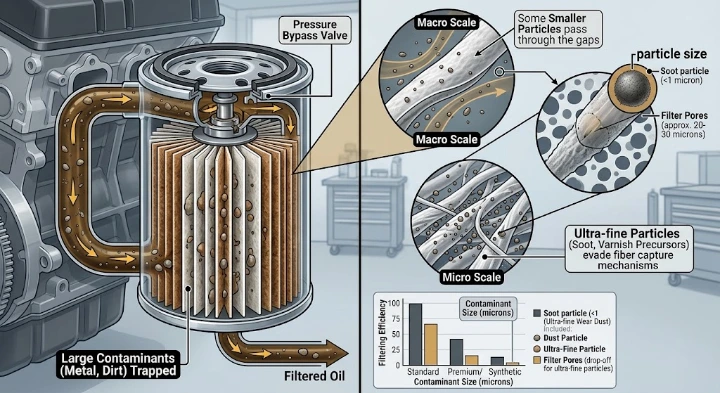
- Most OEM full-flow elements carry a nominal rating of 25 to 40 microns, rarely exceeding an absolute beta rating (βz ⋟ 200) below 15 microns.
That leaves an immense engineering mismatch: any abrasive particle below 15 microns circulates completely unimpeded through your lubrication circuit.
The problem lies in your factory filter.
Your engine needs a large volume of oil flowing continuously to prevent serious damage.
Because the oil must flow quickly, factory oil filters use relatively porous filter paper. If the filter were too fine, it would restrict the oil flow, starve the engine of lubrication, and potentially cause severe damage within minutes.
Think of a standard factory filter like a screen door.
A screen door easily keeps out flies and birds (large metal chunks and broken parts). But it does nothing to stop fine sand and dust blowing in from outside. Tiny abrasive particles slip straight through the filter, enter the engine’s delicate oil cushion, and slowly grind away the protective metal coatings.
The "Clean Oil" Optical Illusion
The human eye cannot see particles smaller than about 40 microns. For comparison, a human hair is roughly 70 microns thick.
This means you cannot see a tiny silica particle or a cluster of soot floating in diesel oil. To a technician checking the dipstick or doing a simple blotter spot test, the oil may still look perfectly clean.
Inside the engine, however, these tiny particles can cause serious damage.
The clearances between moving engine parts are extremely small. When a hard particle gets trapped between two moving surfaces, it can become embedded in the softer bearing material.
As the parts continue to move, the trapped particle acts like a cutting tool. It scratches the metal surface, creates friction and generates heat. This is known as three-body abrasive wear. The process creates more wear particles, which can cause even more damage and accelerate engine wear.
Field Reality: The 11,000-Hour Premature Overhaul
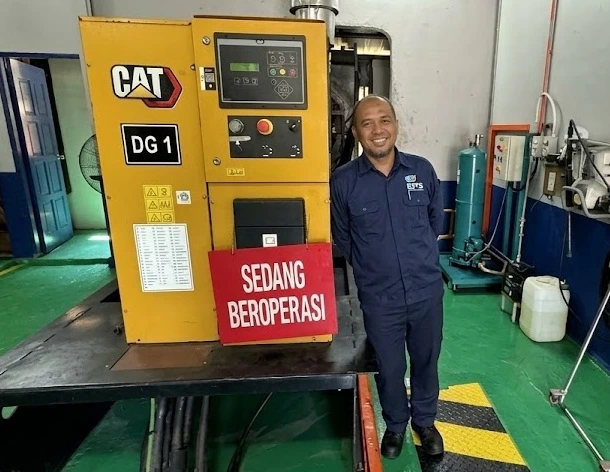
Consider a remote baseload power station operating two Cummins QSK60 diesel generator sets.
The maintenance team followed the recommended 250-hour oil change intervals and used only the factory dual full-flow spin-on filters. Regular oil samples showed wear metals within their normal historical range.
Yet, at just 11,000 operating hours—well before the expected 18,000-hour overhaul target—both engines developed a sharp drop in hot oil pressure.
When the engines were dismantled, the cause became clear: the bearings showed extensive wiping, while the cylinder liners had severe polishing that had damaged the original cross-hatch surface.
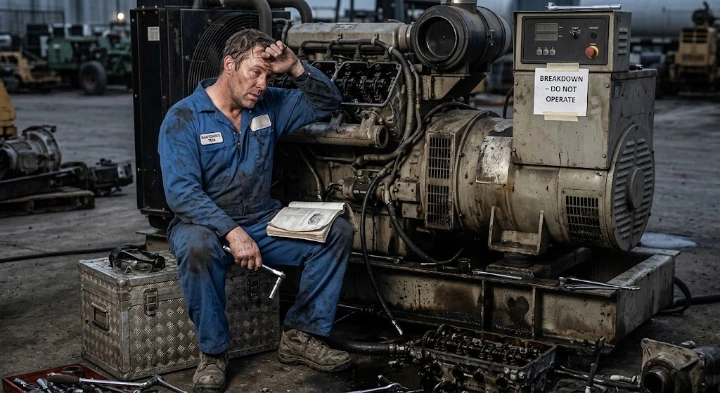
A later ISO 4406 particle-count test on freshly changed oil showed a cleanliness level of around ISO 22/20/17. More than 85% of the particles were between 2 and 6 microns.
The engines had not been neglected. The oil was changed on schedule, and the lubricant was suitable.
The problem was that the filtration system was not removing the smallest abrasive particles. In effect, the engines were continuously running with a fine abrasive contaminant circulating through the oil system—like a microscopic honing compound.
Key takeaway: If your filtration strategy ignores particles below 10 microns, you may be missing the particles that cause the most critical wear. The oil can look clean and still contain enough microscopic contamination to gradually damage bearings and other precision surfaces.
2. What Is Actually in "Dirty" Oil?
Engine oil does not simply wear out from old age. It gets contaminated by five major culprits:
- Combustion Byproducts: Soot Agglomeration and Carbon Sludge: Tiny black carbon specks created when diesel fuel burns. At first, oil additives keep them harmlessly floating. But once the oil gets overloaded, these specks clump together into abrasive clusters that polish the inside of engine cylinders until they lose grip.
- Solid Particulates: Road Dust (Silica) and Wear Debris: Tiny silica grains sucked in through air intakes and breathers. Silica is harder than steel. When it gets between spinning parts, it gouges the metal and carves deep scratches.
- Moisture: Condensation and minor coolant leaks that mix with hot oil. Water breaks down protective oil chemicals into corrosive acids and causes tiny steam explosions that pit bearing surfaces.
- Fuel Leaks: Unburnt diesel seeping past worn fuel injectors. Diesel thins out engine oil, turning thick protective fluid into watery liquid that cannot cushion heavy mechanical loads.
- Thermal Stress and Oxidation Byproducts (Varnish and Lacquer): Modern diesel engines run hotter, accelerating oil degradation and creating tiny varnish precursors that conventional filters cannot remove. As they build up, they form sticky varnish that can cause VGT vanes and hydraulic valves to stick and reduce oil-cooler efficiency.
3. The Myth of Frequent Oil Changes
A common belief is that simply changing your oil and filter more often—say, every 250 hours instead of 500—will solve the issue.
Unfortunately, it does not.
A brand-new factory filter still has the exact same porous "screen door" mesh. A tiny particle of abrasive dust will pass through a brand-new filter on minute one just as easily as it does on day thirty.
Draining oil every few weeks dumps expensive, perfectly usable base oil down the drain without ever addressing the root cause of engine wear.
4. The Mechanical Solution: How Offline Filters Work
If you cannot make the standard filter tighter without choking the engine, how do you get rid of invisible dirt?
You separate engine oil delivery from oil cleaning using offline filters (often called a "kidney-loop" system).
The "Kidney Dialysis" Analogy
Think of how the human body works:
- Your heart pumps blood quickly throughout your entire body to keep your organs alive. It cannot afford to slow down.
- Your kidneys tap into that bloodstream, quietly drawing off a small amount of blood at a gentle pace, filtering out microscopic waste, and returning purified blood to the body.
An offline filter works exactly like a kidney dialysis machine for your engine.
While the engine's main pump keeps oil flowing at full speed through the factory filter, an independent auxiliary unit gently pulls a small stream of oil (5% to 10% of the tank) through a dense, thick filtering cylinder.
Because this side-loop moves slowly, it can pass oil through tightly packed fibers without choking the engine.
- Traps Microscopic Grit: It stops particles down to 1 micron - far smaller than the engine’s protective oil cushion.
- Soaks Up Water: The dense fiber core absorbs water, stopping acid formation.
- Zero Starvation Risk: If the offline filter becomes completely full, it simply slows its own filtering down. The main engine continues running safely on its standard factory circuit.
5. The Smart Watch for Your Engine: Online Oil Condition Monitoring
Installing a super-fine filter cleans the oil, but what happens if a fuel line cracks or a coolant gasket leaks between inspections?
Traditionally, businesses pull an oil sample in a plastic bottle and mail it to an off-site laboratory. It often takes 7 to 14 days to receive results via email.
If diesel fuel leaks into your engine on Monday, running the machine for two weeks while waiting for lab results means your engine will suffer catastrophic metal damage before the report ever arrives.
That is precisely why online oil condition monitoring is essential.
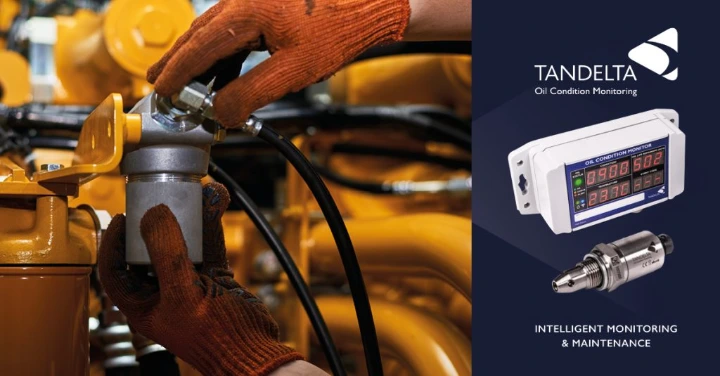
By mounting compact electronic sensors directly within the oil lines rather than relying on delayed mail-in laboratory analysis, you gain continuous insight into lubricant quality. These devices function much like a fitness tracker or smartwatch for your engine, tracking fluid health as it operates.
This eliminates guesswork from scheduling oil changes: maintenance teams service equipment only when live data confirms it is actually required, while automated alerts instantly flag operational abnormalities.
6. The Bottom Line: Why Clean Oil Saves Serious Money
Industrial maintenance managers often face skepticism when securing budget approval for secondary filtration systems.
Financial controllers look at an advanced offline filtration skid or kidney-loop retrofit and fixate solely on the initial CAPEX plus recurring replacement element costs. This perspective ignores the sheer financial waste of scheduled oil dumps.
Engine oil does not have an expiration date stamped onto its hydrocarbons. The base stock remains chemically stable for thousands of hours; oil is thrown away simply because it becomes saturated with micro-silt, soot, and moisture.
When you install offline filters and continuous online oil condition monitoring, you convert your lubrication circuit from a consumable waste stream into a perpetual capital-preservation asset.
Investing in ultra-fine filtration is not just about clean oil; it is an easy-to-justify financial decision.
Consider a heavy-duty industrial diesel generator running continuous operations in Malaysia:
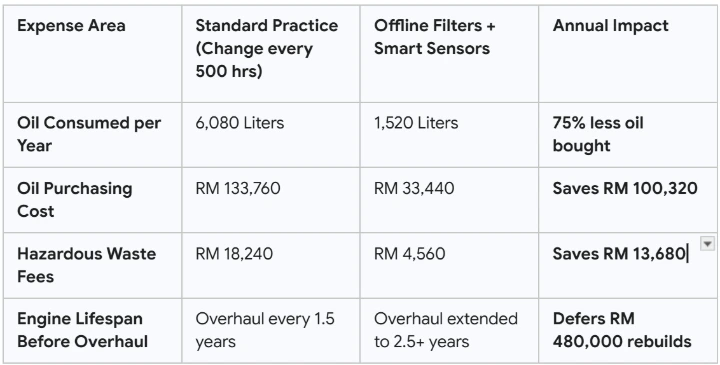
By keeping oil continuously polished, parts stop grinding against each other. Crankshafts, bearings, and cylinders last two to three times longer, preventing catastrophic breakdowns during peak production.
Even after factoring in equipment installation costs, most operations recover their entire investment within 6 to 12 months.
Summary: Three Steps to Protect Your Engine
- Recognize Invisible Wear: Oil that looks clean to the naked eye can still be packed with microscopic grit that cuts metal bearings.
- Add a Kidney Loop: Factory filters protect against catastrophic blockages; offline filters remove the microscopic sand that causes long-term wear.
- Monitor in Real Time: Pair fine filtration with online oil condition monitoring to catch leaks instantly instead of waiting weeks for laboratory reports.
Ready to Protect Your High-Value Equipment?
Don't wait for an unexpected engine teardown to discover what is circulating in your lubrication system.
- Option 1: Request an Oil Health Consultation — Speak with our fluid reliability specialists to evaluate your fleet's current oil cleanliness and risk factors.
- Option 2: Calculate Your Fleet's Total Cost of Ownership Savings — We can help calculate how much your plant can save on oil drums, disposal costs, and deferred overhauls.
- Option 3: Request More Information — Download or request our brochure, datasheet and case studies.