
- Massive Energy Waste: To work, traditional centrifuges have to heat up oil to extreme temperatures (95°C). This consumes a huge amount of electricity—enough to be a significant drag on a ship’s energy efficiency.
- The "Sludge" Burden: Centrifuges generate a staggering amount of waste (sludge) that is expensive and difficult to dispose of.
- Hard on the Crew: Maintaining these machines is a grueling, manual job. It requires hours of labor to clean the internal parts, often exposing crew members to fumes and safety risks during the process.
- Hidden Damage: Because of how they work, centrifuges often miss "fine" contaminants like fine particles, acids and varnish that slowly damage the engine over time, leading to expensive repairs down the road.
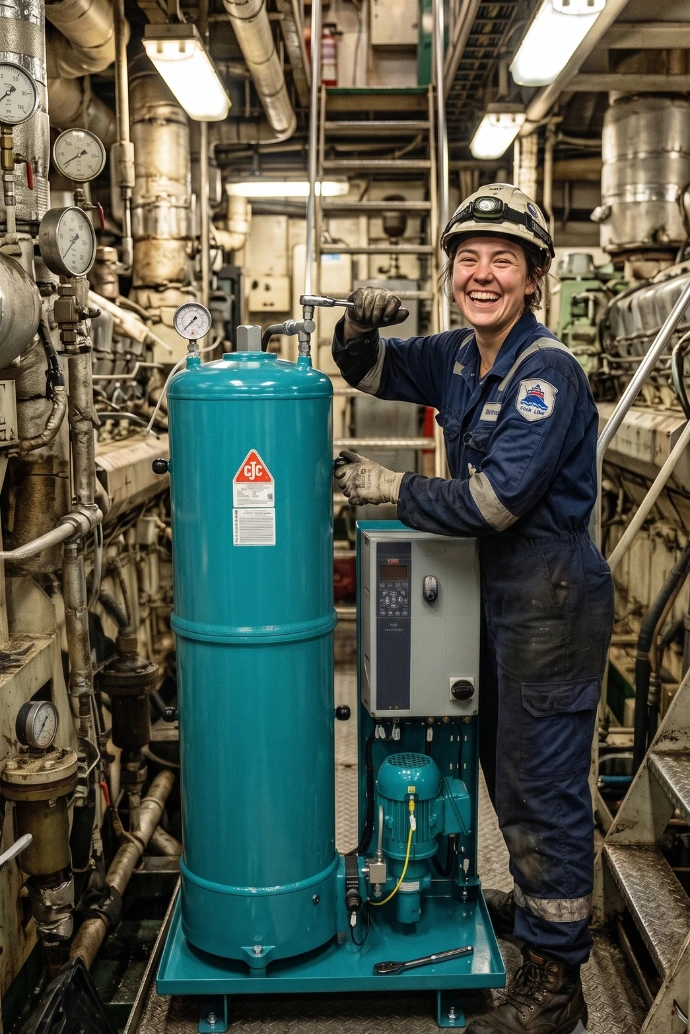
The Better Way: CJC Filtration
- 97% Energy Savings: Because it doesn't need to heat the oil to high temperatures, it dramatically slashes the energy consumption of the engine room.
- Cleaner Oil: It doesn't just filter solids; it also absorbs water and acidic chemicals that cause engine wear, keeping the oil cleaner for longer.
- Simple Maintenance: Instead of the hours of manual labor required to clean a centrifuge, the crew only needs to change a filter insert twice a year—a simple task that takes about 30 minutes.
Why This Matters for Everyone
- Helping the environment: Reducing carbon emissions by saving energy and cutting down on waste.
- Protecting the crew: Removing the hazardous, back-breaking work of maintaining old equipment.
- Future-proofing ships: Helping vessels meet international environmental standards, ensuring they can keep trading and operating for years to come.
What the Results Look Like: Real-World Success Stories
Learn From Others
- Mr. Kristian Brauner, CTO Svitzer A/S
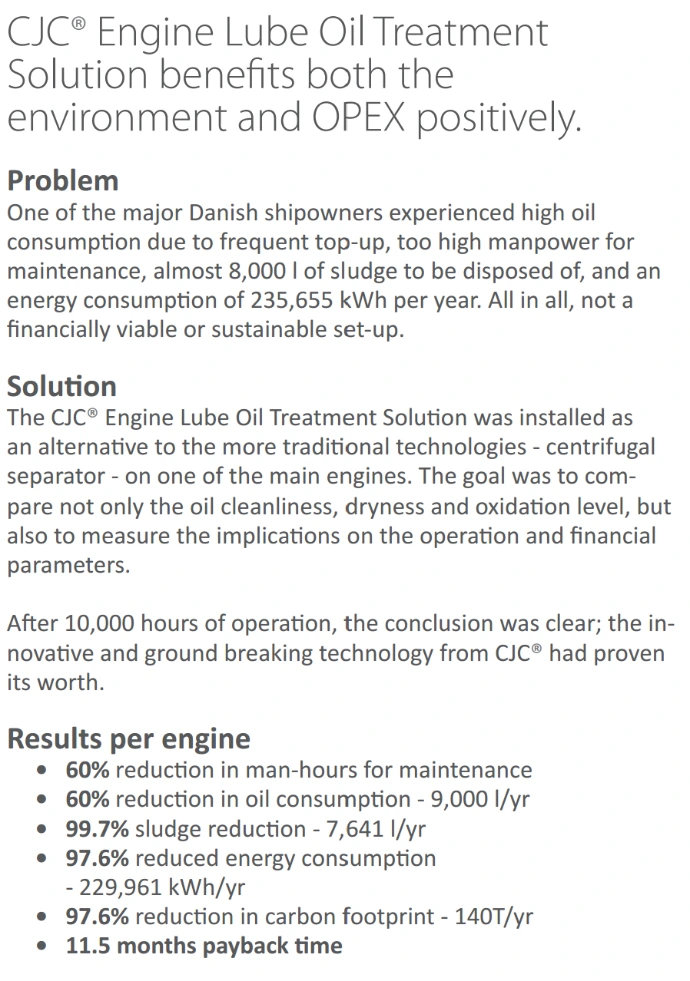
The transition to modern filtration isn't just theoretical; it's already transforming operations on vessels worldwide. Here is what happened when different ships made the switch:
- Restoring Oil Quality (Wärtsilä 6L20DF): One engine saw its oil restored to its original, clean state. This drastic improvement in oil health is expected to extend the life of critical engine parts by 3 to 5 times.
- Improving Crew Life (MV Eidsvaag Vega): The switch eliminated 190 hours of grueling maintenance work every year. Most importantly, it removed the need for the crew to manually clean separator bowls every four days—a task that previously forced them to breathe in harmful diesel fumes.
- Cutting Waste (Bourbon Offshore): By cutting soot levels by 90% (dropping from 1.0% down to just 0.1%), this vessel prevents 280 cubic meters of sludge waste from being produced annually.
- Lowering Consumption (Large Container Vessel): On a massive MAN 11K98ME engine, the system reduced lube oil consumption by 10-20% and saved 150 tonnes of CO2 annually, reaching full return on investment in only 7 months.
Frequently Ask Questions
Engine room skepticism is a sign of a healthy safety culture. We address the most common concerns here:
Q: Can we remove the centrifuge entirely?
A: Yes. CJC® is designed to be the only cleaning unit. While some owners keep the centrifuge as a backup, it is no longer required for primary operation.
Q: What is the actual workload for the crew?
A: Workload is reduced by 95%. It involves just two insert changes per year (30 mins each). There is no bowl washing, no seal replacement, and no specialized technical settings.
Q: What if we simply stop running the centrifuge without installing a filter?
A: This is a high-risk gamble. Without cleaning, soot and acids will build up, leading to rapid wear and premature overhauls that cost far more than the savings in energy.
Q: Is there an engine safety risk?
A: No. CJC® is an offline, low-pressure system. If the filter reaches capacity, it has no impact on the main engine oil pump; the engine remains protected by its standard in-line safety filters.
Conclusion
In short, replacing century-old technology with modern, efficient filtration is a simple, proven way to make shipping cleaner, safer, and more sustainable.